Rural Economic Development That Works
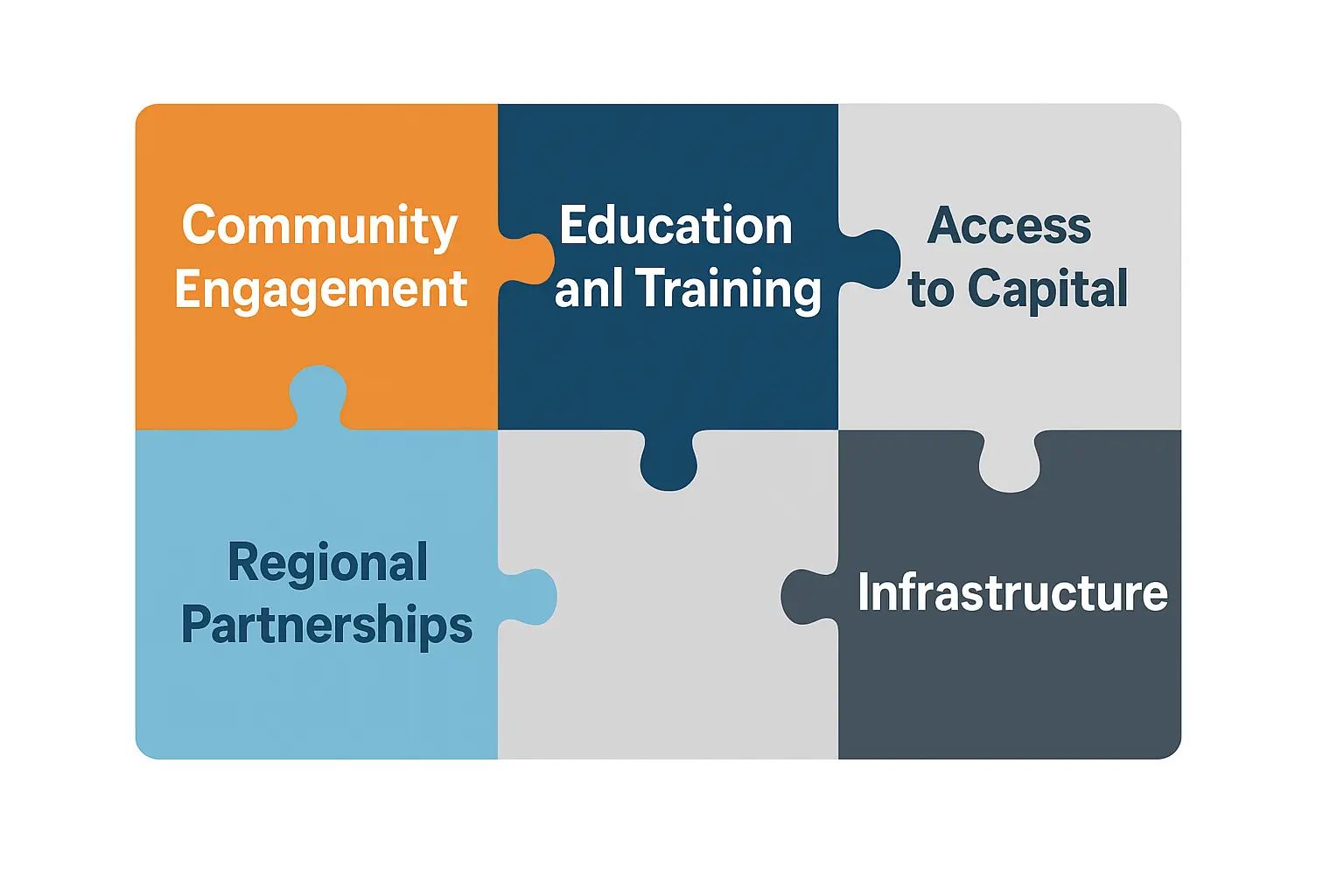
I recently had a front row seat to observe the essential pieces of the rural economic development puzzle being skillfully placed together as I visited Orofino, Idaho. There, I provided a Grow Your Business growth strategy masterclass. I am grateful to Idaho's Clearwater County Economic Development office, the Clearwater Economic Development Association, the Clearwater County Chamber of Commerce, and salt-of-the-earth business owners! As you read on, can you identify each of these highlighted below as important pieces of the puzzle?
In rural communities, small businesses are the heartbeat of local economies, providing jobs and preserving cultural identity. Collaboration and support are critical for their success and sustainable economic development. By uniting resources, knowledge, and networks, rural communities can overcome challenges like limited access to markets and funding.
Key Pieces of the Puzzle
One Key piece of the puzzle is community engagement. Local governments, residents, and businesses must work together to identify needs and opportunities.
Access to capital is another vital piece. Microloans, grants, or crowdfunding platforms tailored for rural entrepreneurs can bridge financial gaps.
Infrastructure development, such as reliable broadband, enables businesses to compete in digital markets.
Regional partnerships—collaborations with nearby towns or organizations—are another key piece of the economic development success formula. These partnerships can pool resources for shared goals, like tourism promotion or supply chain networks.
Finally, education and training programs empower owners with the knowledge and skills necessary to succeed in a highly competitive environment. There is no shortage of training providers. But not all training opportunities are created equally.
Strategy First!
About 80% of business training providers focus on tactical skills such as accounting, finance, HR, legal, marketing, or other technical aspects of business, for example. Unfortunately, only about 10% emphasize strategy and how to apply it. The remaining few offer blended programs, with tactical dominating (over strategic emphasis) due to operational demands. Strategy Guidemap is part of the 10% because strategy is a force multiplier. When strategy undergirds tactics, those tactics—the day-to-day operations of your business—will yield a far greater ROI. Always get strategy right, then align tactics. Strategy first, always!
Small Businesses Thrive
When the right pieces are placed together, rural small businesses thrive, creating jobs and retaining talent. Collaboration fosters resilience, ensuring these communities not only survive but flourish. By investing in these puzzle pieces, rural areas can build sustainable economies that celebrate their unique strengths and also embrace the emerging opportunities of a changing landscape.
There are other pieces that may help. Some approaches advocate for the recruitment of larger employers, which can bring investment and jobs, though it may sometimes clash with local culture and sustainability goals. Additionally, support for primary and secondary sectors—such as agriculture, mining, and manufacturing—can strengthen the economic base by enhancing local production and processing capabilities.
What other "puzzle pieces" have you observed being impactful?